

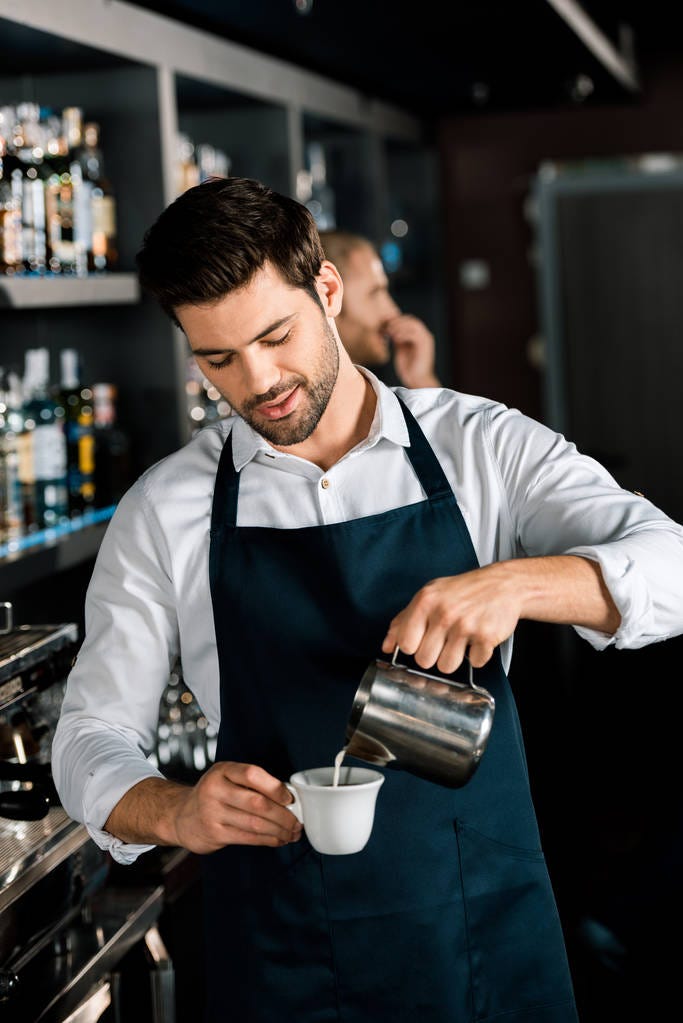
When we last talked with Felix Lee, he was learning to make great coffees with his tech company employer’s lavish coffee equipment. After many years, a global pandemic, and a successful tour of duty at a startup, we found Felix making a pourover at Silver Sloth Coffee during the early morning rush.
“I joined a tech company so I could afford rent in San Francisco, but my true passion was always coffee.” He told us as he cleaned an espresso portafilter. “But after my company IPO’d, I didn’t need to work in tech anymore. So it was a perfect time to take the plunge into doing coffee full-time.”
Before the pandemic, Mr. Lee dialed in his coffee by A/B testing different brews on his coworkers. When lockdown happened, he spent $10,000 on a home setup, made his own water, and drank 8 cups of coffee per day (switching to decaf after the second cup to avoid jitters). As the world opened back up, he brought his own beans and a portable pourover kit on trips instead of stooping to drink inferior gas station coffee.
Mr. Lee can now be found at Silver Sloth churning out espresso drinks 3 days a week, the perfect amount of time to hone his coffeemaking skills while having time the other 4 days to pursue other hobbies and attend dinner parties with his friends.
He’s not the only one. Silver Sloth Coffee owner Jerry Schmidt estimates that around 40% of his new barista hires are current or former techies. Many work weekend shifts while keeping their tech jobs, while others are fully retired from the industry. Their motivations vary from honing their coffeemaking craft, imposing some structure on an otherwise open-ended life, or “cosplaying as a normal person.” Some entrepreneurial techies went straight to starting their own coffee shops: Paper Son Coffee was founded by a Harvard-educated former software engineer.
Not everyone is thrilled. “These [expletive] techies have so much money that barista pay is a rounding error,” said one longtime barista who wished to remain anonymous. “They’ll happily work minimum wage to perfect their latte art or find some existential meaning. I actually need this job to pay rent. How am I supposed to compete with that?”
Meanwhile, even the barista field is not immune to the AI wave sweeping San Francisco. A wave of startups are finding that the perfect demonstration task for their robot arms is - you guessed it - making espressos. Perhaps now is the best time to try being a barista before the job no longer exists.